
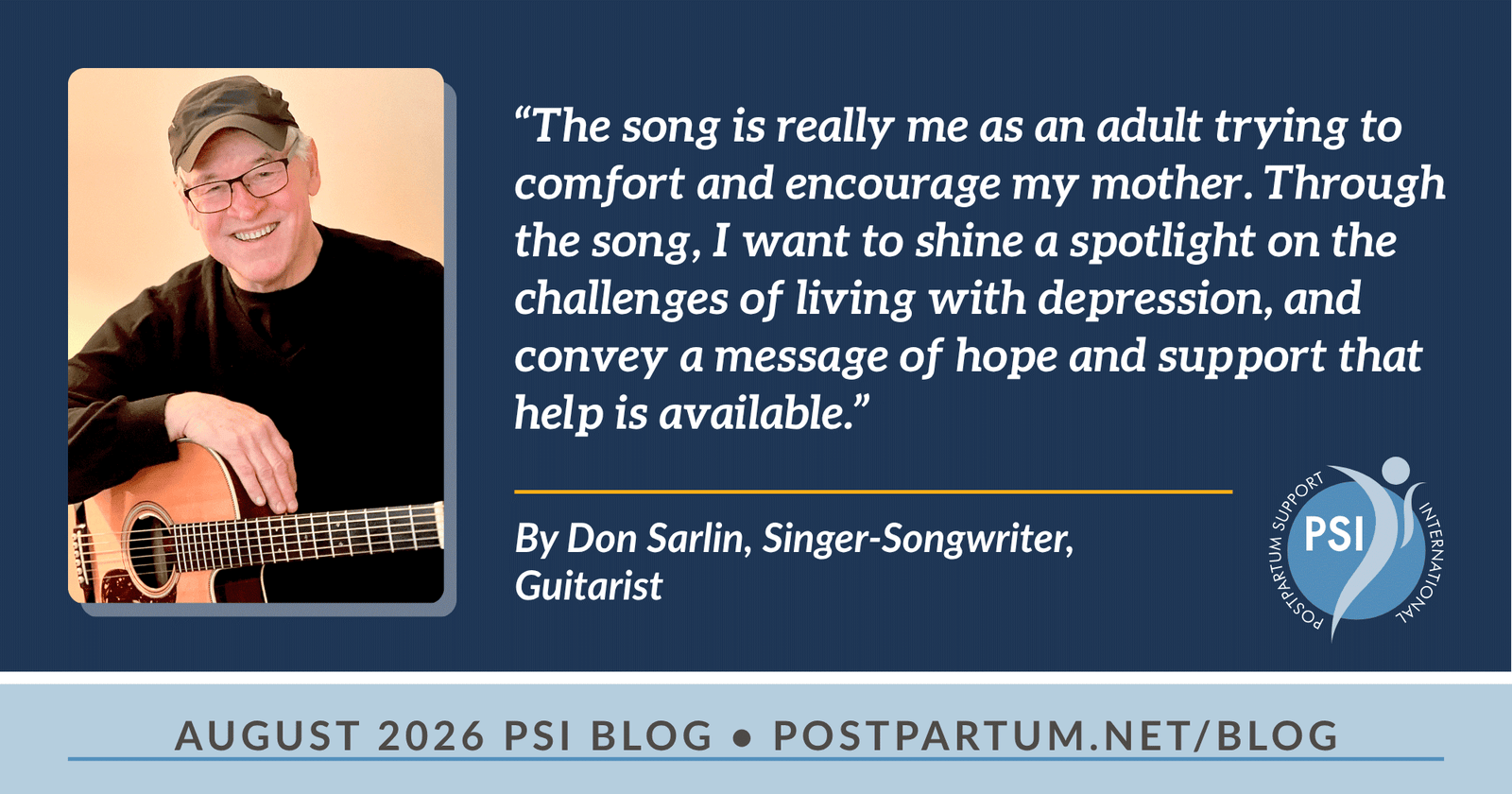
A Dialog with Don Sarlin, Singer-Songwriter, Guitarist
“I see the shadow in your smile
I see it as you flip away
It’s like a darkish cloud passing over
Hiding daylight from the day
I do know you’d by no means say you’re hurtin’
I do know confession’s not your type
However of 1 factor I’m sure
That’s the shadow in your smile”
Phrases from Don:

My mom, Lilian Bass Sarlin, suffered from profound melancholy and bipolar dysfunction, which manifested with the passing of her mother-in-law, with whom she was very shut, within the mid-Fifties, when remedy choices have been restricted and fairly primitive. I used to be 5 on the time, the youngest of three youngsters. My mom was hospitalized for a few 12 months round that point, remaining underneath remedy and symptomatic for the remainder of her life. She by no means actually escaped the challenges of the situation, and handed away within the mid-Nineteen Eighties. I wrote this music impressed by her expertise.
I bought the inspiration for the music after I realized of associates’ experiences with postpartum melancholy, and examine how frequent postpartum challenges are at this time. It introduced again reminiscences of my mother’s difficulties, and the look in her eyes (the “shadow”) that betrayed her efforts to hide her unhappiness for a lot of her life. The music is actually me as an grownup attempting to consolation and encourage my mom. Via the music, I need to shine a highlight on the challenges of residing with melancholy, and convey a message of hope and help that assist is out there.
Q: Thanks for sharing your lovely, but heartbreaking, music with us. Will you share with us what the method was like penning this music?
Don: After all, Samantha, and thanks for the sort phrases. Writing the music was a fairly emotional expertise. I first experimented with writing it from the attitude of my five-year-old self, expressing the confusion and upset of a younger little one. John Lennon’s Mom, a music of childhood abandonment, got here to thoughts. I ended, discovering it upsetting and with out a path to convey a message of consolation. I then tried writing from the attitude of a sister-in-effect me as an grownup – who might provide consolation and the promise of higher days to return, and that felt proper. The music, which has a mariachi really feel to it, was immediately impressed by Linda Ronstadt’s 1987 spanish-language album, Canciones di mi Padre, along with her heartfelt singing and haunting mariachi melodies – I’d heard it streaming whereas the music was coming to life. When it got here to recording it, I recruited a positive, empathic vocalist, good buddy (and a mother) Iris Schaffer Corridor, joined by her associate Doug Corridor.
Q: We’d love to listen to extra about Lilian – who she was, aside from her struggles with psychological well being.
Don: Mother was fairly a dynamic girl in her youth, with a feisty persona and a positive humorousness and journey. She grew up in a working-class immigrant household in New York who operated a sweet retailer. She at first studied style design, however managed by dint of her intelligence and persona to go to work as an assistant to legendary Broadway producer and expertise agent Leland Hayward (South Pacific, The Sound of Music), hanging with such characters as younger Jerry Siegel and Joe Shuster, creators of Superman, and touring to Europe. She derived nice pleasure from being a mom to myself and my two older brothers. Even throughout her most attempting instances her depraved humorousness would re-emerge. “Manic melancholy is enjoyable half the time,” she as soon as noticed, within the days earlier than “bipolar” entered the lexicon.

Don: My mother’s struggles started within the mid-Fifties when remedy was rudimentary, crude, and typically debilitating. Assist was fairly restricted and associates and neighborhood in post-war America had little familiarity with the situation, making it a supply of embarrassment and social isolation. Right now she would little question have benefited from the far better understanding of melancholy and bipolar dysfunction, the far more efficient pharmacological choices out there and the wonderful help networks that exist to assist people along with her challenges.
Q: You’ve gotten shared with us that your mom struggled along with her psychological well being for many of your life. How did this have an effect on you as you have been rising up? As an grownup?
Don: Rising up my mother’s situation might throw our house in an uproar, with a lot stress ensuing. My father, a instructor of restricted means, struggled to supply for the household, give his sons the eye we wanted when my mother was not in form to take action, and safe take care of her. As an grownup, I believe I developed a want to keep away from confrontation and battle, usually performing as a conciliator in my private {and professional} life.
Q: How did your mom’s expertise with melancholy form your individual understanding of psychological well being?
Don: I believe it gave me a heightened sense of empathy for people scuffling with such challenges, at the same time as a toddler. Based on household legend, at about 10 years previous I returned house a bit bloodied from a confrontation with a neighborhood child who’d began the battle. When my mom mentioned she was going to inform his mom, I pleaded, “Please don’t, Mother – he’s bought issues.”
Q: Postpartum Assist Worldwide needs each mom and new dad or mum to know, “You aren’t alone. You aren’t responsible. With assist, you may be effectively.” How does this message resonate with you?
Don: It goes straight to my coronary heart, and I can solely want my mother had acquired such help when she wanted it most.
Q: As somebody who has struggled with postpartum melancholy, I can say you’ve gotten completed a good looking job in capturing what it felt like at instances. There have been many days I struggled to placed on my make-up or felt overwhelmed caring for my child. As a songwriter, will you share your perspective on remodeling somebody’s lived expertise into lyrics?
Don: I believe particulars are the lifeblood of songs. I attempt to present the specifics from which the listener can derive the themes and the overarching message, resisting the urge to evangelise. Certainly one of my favourite songwriters is John Prine, who wrote Angel From Montgomery, replete with element and environment, and which Bonnie Raitt recorded and has most likely sung at each present for over 50 years. I attempt to create worlds the listener can inhabit.
Q: You shared that you really want the music to shine a light-weight on the challenges of residing with melancholy and convey a message of hope. What name to motion do you’ve gotten for listeners?
Don: If there’s a message I’d hope to impart, it’s for family and friends to be looking out for that “shadow” and encourage a mom to hunt assist.
Q: Is there the rest you’d wish to share?
Don: Simply my honest gratitude for the prospect to speak about this with you, Samantha. And thanks a lot to you and your group for serving to of us efficiently navigate the challenges my mother confronted.
In regards to the Writer

Don Sarlin
Don Sarlin, guitarist and songwriter, has toured with Van Morrison, David Bromberg, Mary Travers, and others. His time on stage with such of us impressed him to put in writing songs of his personal. He’s described his works as “screenplay songs,” capturing characters, a plot, a spot and a time and performing them with memorable solo guitar instrumentals as effectively. Hear Don’s music at donsarlin.com.
Interview carried out by Postpartum Assist Worldwide’s Samantha Reaves, MA, PMH-C.
Discover these PSI Assets:
Learn More about Perinatal Mental Health Disorders
Get Help
Donate in Honor of a Loved One
Subscribe to the PSI Blog

Join by PSI
Obtain our free app “Join by PSI” in your app retailer to entry PSI help, assets, and knowledge within the palm of your hand.


Trending Merchandise