
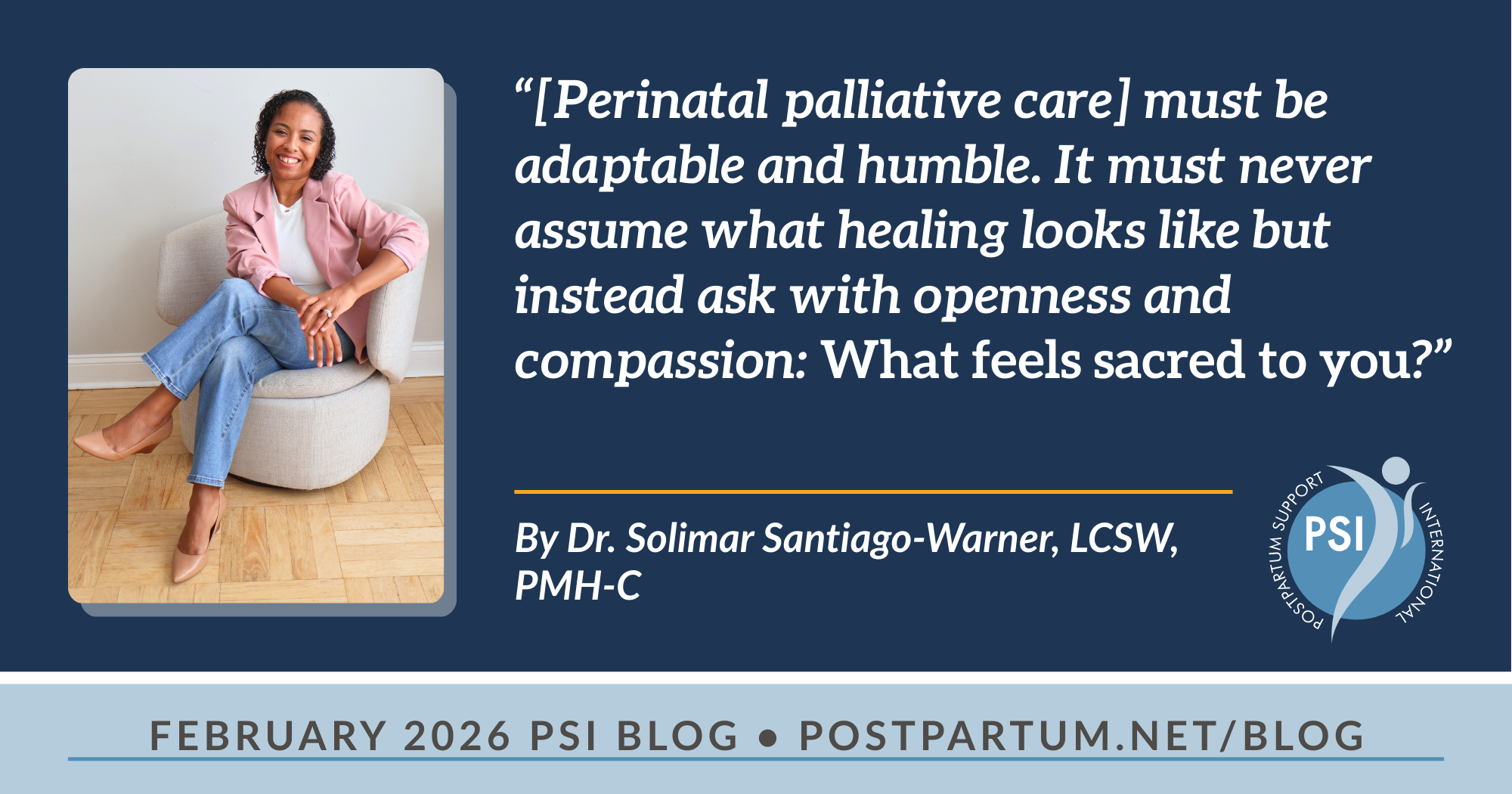
By Dr. Solimar Santiago-Warner, LCSW, PMH-C
When most individuals think about beginning plans, they image selections about epidurals, music playlists, or skin-to-skin time. Nevertheless, for households carrying a child with a life-limiting situation, beginning plans can change into a sacred roadmap for connection, which means, and reminiscence within the face of profound grief.
That is the center of perinatal palliative care (PPC). It’s not about giving up, however about displaying up otherwise. It facilities on the emotional, bodily, and non secular wants of fogeys navigating the in-between house of loving and getting ready to lose a child all of sudden.
As a clinician and perinatal palliative care social employee, I’ve witnessed the novel tenderness and quiet energy that PPC makes potential. It’s time we deliver these conversations out of the shadows and into the broader perinatal psychological well being area as a result of loss doesn’t exist outdoors postpartum, and grief doesn’t observe a timeline.
What Is Perinatal Palliative Care?
Perinatal palliative care is an interdisciplinary mannequin of assist provided from the time a child is recognized with a situation that will restrict their life, whether or not throughout being pregnant, at beginning, or shortly after. It honors the complexity of grief, the fantastic thing about bonding, and the dignity of alternative.
PPC groups work with households to:
- Make knowledgeable selections about medical interventions or consolation care
- Create versatile and inclusive beginning plans that replicate your loved ones’s values and priorities.
- Help emotional, psychological, and non secular wants.
- Facilitate memory-making, rituals, breastfeeding, and legacy-building.
- Provide grief assist throughout the postpartum interval and past.
This mannequin doesn’t substitute hope; it expands it. It offers house to ask: What can we nonetheless do with the time we’ve got? What issues most to you and your child proper now?
Grief Begins on the Second of Prognosis
Some of the misunderstood components of perinatal loss is how early the grief begins. For a lot of households, the second of analysis, whether or not at 12 weeks or 32, is when all the pieces modifications. Time turns into unsure. Pleasure is shadowed by worry. And but, the infant continues to be very a lot alive.
Perinatal palliative care doesn’t anticipate a loss to happen; it steps in with care, not cures. PPC validates anticipatory grief and affords language, rituals, and delicate planning for what’s forward. It creates room for love, even within the midst of sorrow.
The Start Plan as an Act of Love
I usually say the PPC beginning plan is just not about management, however about company in heartbreak. The assist supplied by the PCC staff helps mother and father reclaim some sense of which means and selection in a scenario the place a lot is past their management.
A PPC beginning plan might embrace:
- Who can be current at beginning (household, chaplain, photographer).
- When and methods to maintain the infant.
- Spiritual or cultural rituals to honor the infant’s life.
- Consolation measures for the infant, birthing mum or dad, and accomplice.
- Methods to create keepsakes corresponding to photographs, heartbeat recordings, and footprints.
- Whether or not the infant will obtain resuscitation or be held in consolation.
- Language preferences (instance: what mother and father need their child to be known as).
I’ve seen these plans rework sterile rooms into areas of reverence. They permit households to mum or dad, even within the shortest of lifespans. That act of having the ability to say, “I held them, I named them, I bathed them, I sang to them,” issues. It turns into a part of the continued story that households carry ahead.
The Postpartum Physique After Loss
Too usually, the postpartum expertise after perinatal loss is erased or minimized. However the physique remembers. Milk nonetheless is available in. Stitches nonetheless heal. Hormones nonetheless fluctuate. And the empty arms really feel unbearably filled with grief.
Postpartum assist should acknowledge the embodied trauma of loss. This implies:
- Providing lactation assist that features milk suppression or donation choices.
- Acknowledging the emotional toll of postpartum bodily modifications.
- Supporting physique picture after loss, particularly when reminders really feel merciless.
- Offering trauma-informed care that understands the twin wound—bodily and emotional.
Grieving households deserve doulas, OBs, nurses, and therapists skilled on this panorama. Postpartum grief is postpartum, and it must be held as such.
Cultural and Non secular Care Is Important
There is no such thing as a one technique to grieve, love, or say goodbye to your child. PPC should be intersectional in its method, particularly when working with BIPOC communities. Culturally responsive care contains:
- Asking about and honoring rituals, beliefs, and language.
- Creating house for prayer, chanting, ancestor connection, or silence.
- Recognizing historic and racial trauma in medical settings
- Together with conventional healers, religion leaders, or doulas in planning.
- Supporting immigration, funeral, or naming customs that matter.
PPC should be adaptable and humble. It must not ever assume what therapeutic seems like however as a substitute ask with openness and compassion: What feels sacred to you?
Ongoing Help Past the Hospital
Discharge is just not the tip of the journey, however the starting of a brand new chapter in grief. Mother and father want sustained, compassionate assist lengthy after they go away the hospital. This contains:
- Referrals to perinatal loss therapists.
- Peer assist teams like these provided by PSI.
- Assist navigate future pregnancies after loss.
- Accomplice assist as a result of non-birthing mother and father grieve as nicely.
- Sibling grief and prolonged household training.
- Inventive therapies, rituals, and areas to honor anniversaries.
And let’s not neglect the professionals. Suppliers who bear witness to this sort of loss want supervision, processing, and acknowledgment of their grief. PPC is coronary heart work, and hearts can break open, even in clinicians.
In case you’re a therapist, nurse, beginning employee, or postpartum doula, perinatal palliative care is your area, too. You don’t have to be a palliative specialist to carry house for grief, to say a child’s title, to assist somebody whose arms are empty however whose love is infinite.
Right here’s what we are able to all do:
- Educate ourselves on PPC finest practices.
- Accomplice with hospitals to create compassionate protocols.
- Be a part of PSI’s bereavement trainings and teams.
- Refer households early, earlier than the loss happens.
- Middle the household’s voice and values at each stage.
Grieving mother and father want multilayer and systemic assist. Households deserve care that’s as nuanced, loving, and enduring because the bond they share with their little one.
Closing Ideas
Perinatal palliative care reminds us that grief and love should not opposites, however are companions that enable households to mum or dad in loss, bond amid uncertainty, and say goodbye with reverence, not remorse. Let’s hold saying their names. Let’s proceed to construct techniques that honor tiny lives in important methods.
Keep in mind, even within the darkest rooms, gentle is feasible once we stroll in holding love, listening deeply, and bearing witness to the fullness of their story.
References
Santiago-Warner, S. (2024). Social work apply in perinatal palliative care: An summary. Social Work in Well being Care, 63 (4-5), 248-262. https://doi.org/10.1080/00981389.2024.2316697
Wool, C., & Parravicini, E. (2020). The neonatal consolation care program: Origin and development over 10 years. Frontiers in Pediatrics, 8, 588432. https://doi.org/10.3389/fped.2020.588432
In regards to the Creator

Dr. Solimar Santiago-Warner, LCSW, PMH-C
Dr. Solimar Santiago-Warner, LCSW, PMH-C, is a perinatal psychological well being therapist, grief educator, and founding father of Solmaterna Psychotherapy and Consulting. She makes a speciality of reproductive trauma, perinatal loss, and culturally responsive take care of BIPOC-birthing folks.
Discover these PSI Sources:
Perinatal Mental Health Discussion Tools
Get Help
Provider Directory
Subscribe to the PSI Blog
Trending Merchandise